
Bamboo material selection is the first line of defense against moisture. Our factory prefers to use bamboo that is over five years old. At this stage, the fiber density of bamboo reaches its peak, and the internal conduit structure is tightly packed like a capillary network, which can naturally block water vapor infiltration. However, natural bamboo still contains starch and sugar, which can easily attract mold to settle down. Once when I went to a humid area for after-sales service, I found that the ordinary bamboo flooring of a certain owner's house was covered in mold spots. Upon opening it, the back had turned into a fungal paradise. This is precisely because the nutrients inside bamboo provide a breeding ground for mold. So the raw materials must undergo deep steaming to completely break down sugar and cut off the living conditions of mold from the root. This pre-treatment is like "desensitization treatment" for bamboo, which makes the subsequent moisture-proof process more efficient.
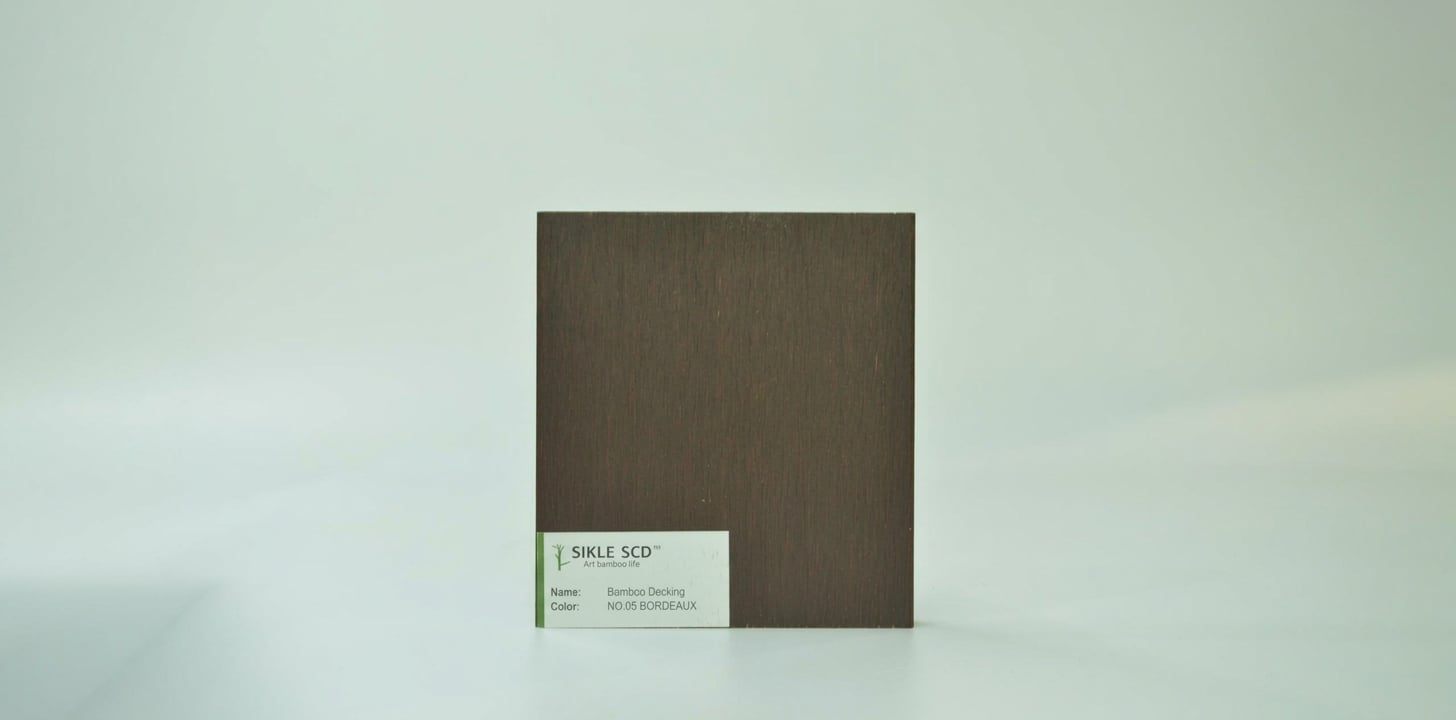
The high-temperature carbonization process is the soul of moisture-proof bamboo flooring. We feed bamboo slices into a specially designed carbonization kiln and bake them continuously for 48 hours in a steam environment of 165-185 ℃. During this process, the hydrophilic hydroxyl groups in bamboo fibers are extensively decomposed, and the water absorption rate of bamboo can be reduced to one-third of that before treatment. I remember one time I accompanied my master to do a comparative experiment. When carbonized bamboo slices and ordinary bamboo slices were soaked in water for 72 hours at the same time, the weight gain rate of ordinary bamboo slices reached 18%, while carbonized bamboo slices only increased by 7%. Even better, the high temperature causes the color of bamboo to turn into a steady coffee color. This discoloration is not caused by dyeing, but by the natural color produced by the coking of bamboo sugar, avoiding the environmental hazards caused by the use of chemical coloring agents. After this process, bamboo is like forged steel, with a more stable structure.
Adhesive is the key to the environmental and moisture resistance of flooring. We insist on using modified soy protein gum, which is extracted from soybean meal and has a 30% higher cost than synthetic gum. However, after curing, it can form a hydrophobic protective layer. Last year during the rainy season, we visited kindergartens that used this type of flooring and found that even if the humidity exceeded 85% for half a month, the floor joints remained dry. On the contrary, some cheap urea formaldehyde adhesives will hydrolyze and release formaldehyde when exposed to moisture, forming a dual blow of "moisture+pollution". It is worth noting that the curing of glue requires appropriate temperature and humidity. We recommend leaving the floor at the construction site for 48 hours before paving, allowing the material to fully integrate with the local environment. This "adaptation period" can increase the bonding strength by about 20%.
The floor locking system, like the seismic structure of a building, requires precise calculations. Our four sided large lock buckle adopts a 45 degree angled mortise and tenon joint, which increases the bite area by 40% compared to traditional locks. This design not only makes the knocking sound more stable during paving, but also forms a micro arch moisture-proof dam at the joints. Laboratory data shows that when humidity suddenly increases, this lock can effectively resist an expansion stress of 1.2 millimeters per meter of length. There was once a particularly damp first floor resident who used our thick locking buckle flooring for three years without any arching. It should be noted that 8-12 mm expansion joints should be reserved during paving. This gap is not a construction defect, but a necessary space for the floor to breathe, just like the wisdom of a gardener who leaves space for tree growth.
Speak with our structural engineers about high-rise, commercial, or handcrafted wood needs.
Strategic Material Planning
 EN