
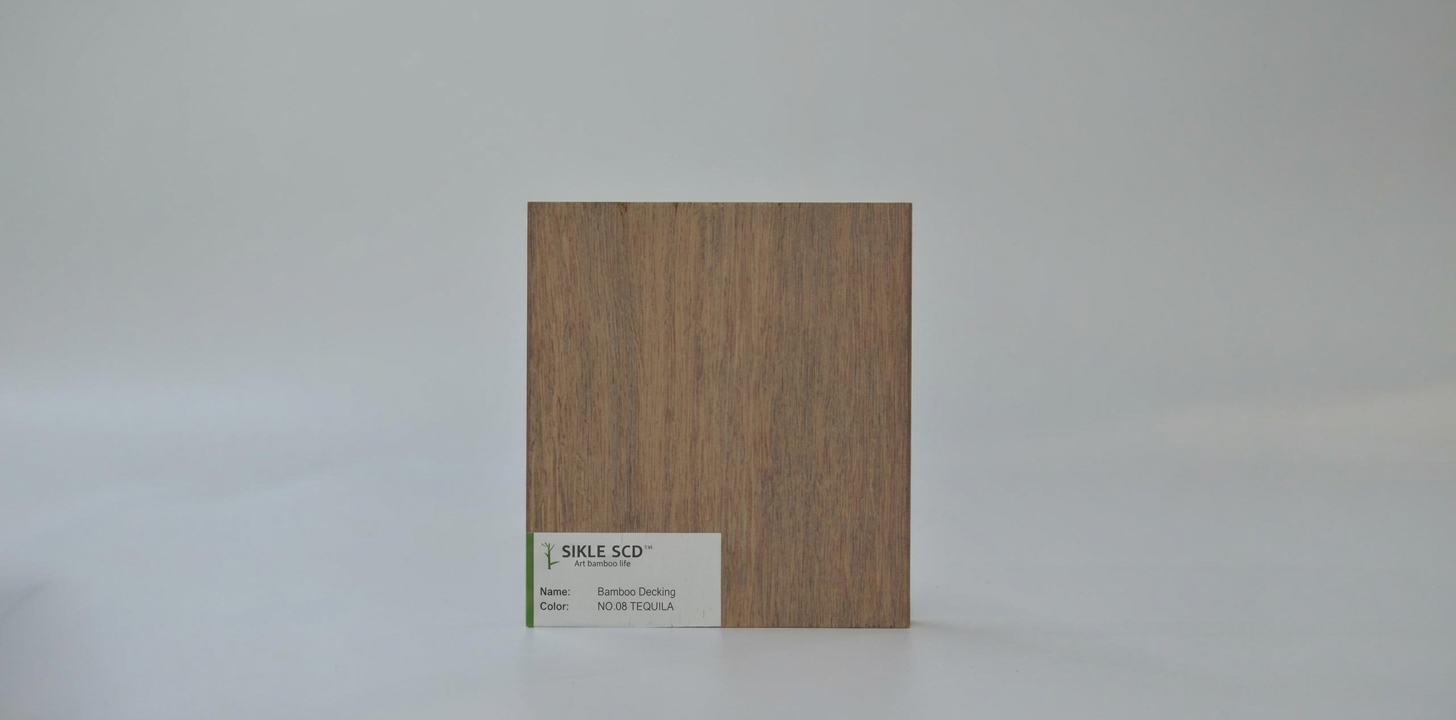
The hardness of bamboo flooring is primarily due to its extremely high density. The density of bamboo is usually between 0.6 and 0.8 g/cm ³, and bamboo flooring treated with high temperature and high pressure can further increase its density to 0.9 g/cm ³ or above. In contrast, the density of oak is about 0.75 g/cm ³, and the density of maple is about 0.63 g/cm ³. This means that bamboo flooring has denser fibers per unit volume, and stronger compression and wear resistance. The high density of bamboo is closely related to its growth mode. Bamboo is a grass family plant, and its stem is composed of countless longitudinally arranged fiber bundles. These fiber bundles accumulate continuously during the growth process, forming a structure similar to steel bars. This natural high-density characteristic allows bamboo flooring to remain intact even when subjected to heavy objects or frequent trampling.
The hardness of bamboo flooring not only depends on the natural characteristics of bamboo, but also on advanced production processes. In the factory, bamboo needs to go through multiple processing steps to become a hard and durable floor. Firstly, mature bamboo is cut into strips, and then sugar and starch are removed through high-temperature steaming to prevent insect infestation and mold growth. Next, the bamboo strips will be dried to a moisture content below 8% to ensure their stability. Subsequently, the bamboo strips were subjected to carbonization treatment under high temperature and pressure, which not only enhanced the hardness of the bamboo but also endowed it with a unique color. Finally, the bamboo strips are glued and pressed to form a tightly packed board. This high-temperature and high-pressure "forging" process further increases the hardness of bamboo flooring, even surpassing most traditional hardwoods.
The hardness of bamboo flooring also benefits from its unique structural design. In factories, we usually use two structural methods to make bamboo flooring: horizontal structure and vertical structure. Horizontal structure is the arrangement of bamboo strips in a flat manner, showcasing the natural texture of bamboo. This structure is suitable for consumers who pursue aesthetics. The vertical structure is the arrangement of bamboo strips vertically, forming a "end face" effect, which greatly enhances the hardness and stability of the floor. Whether it is a horizontal or vertical structure, the fibers of bamboo flooring exhibit a criss crossing characteristic, and this "fiber network" can evenly disperse external forces and reduce local wear. In addition, the surface of bamboo flooring is usually treated with UV coating to further enhance its scratch and impact resistance.
In addition to hardness, the environmental advantages of bamboo flooring are also important reasons for its popularity. Bamboo is a rapidly regenerating resource with a growth cycle of only 3 to 5 years, while traditional hardwood takes decades or even hundreds of years to mature. This rapid regeneration ability makes bamboo flooring an ideal choice for sustainable homes. In the factory, we always adhere to the concept of environmental protection, using low formaldehyde glue and environmentally friendly coatings to ensure the health and safety of bamboo flooring. In addition, bamboo cultivation does not require fertilizers or pesticides, and has extremely low pollution to soil and water sources. Compared to traditional hardwood flooring, bamboo flooring is more suitable
Speak with our structural engineers about high-rise, commercial, or handcrafted wood needs.
Strategic Material Planning
 EN