
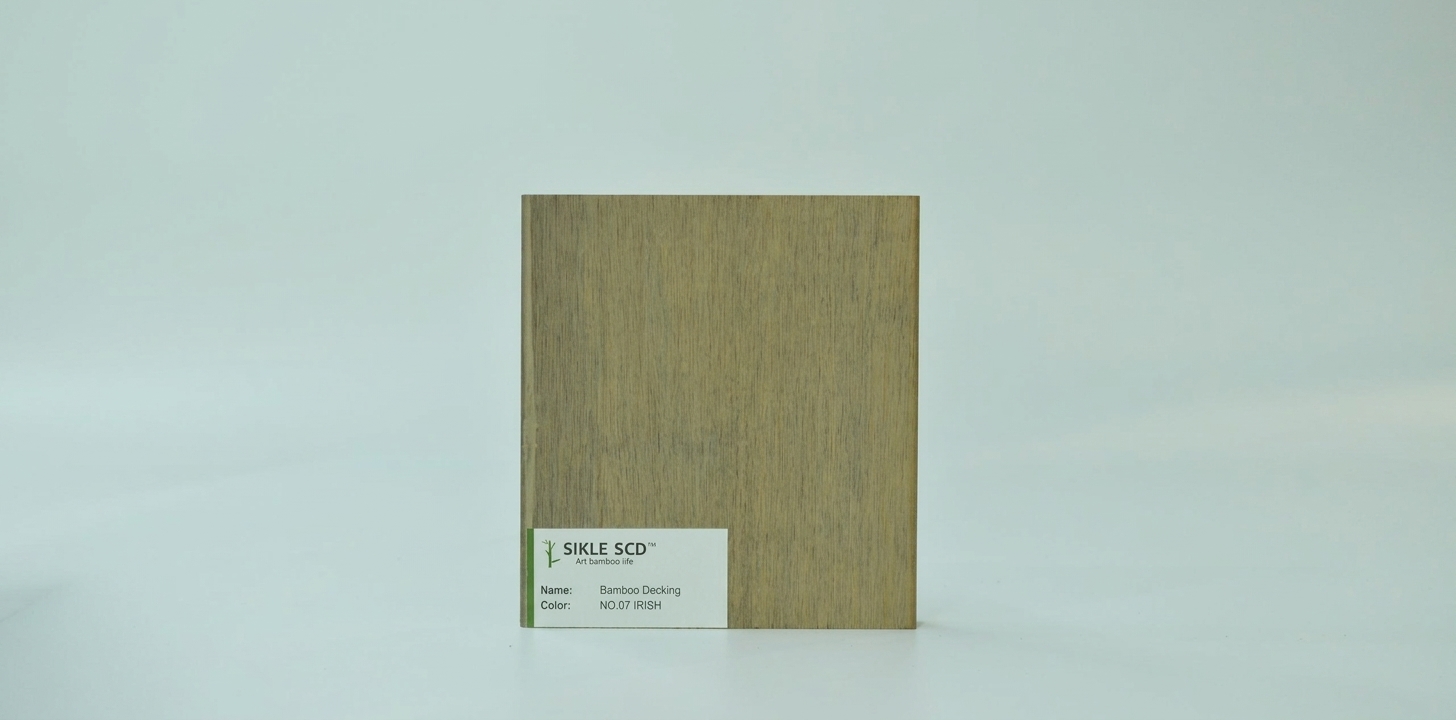
As a technician in a flooring factory, I come into contact with various bamboo flooring products every day, among which carbonized bamboo flooring is highly favored by the market due to its unique performance and beautiful appearance. Carbonized bamboo flooring is processed through high-temperature steaming and high-pressure carbonization techniques, which not only enhance the physical properties of bamboo but also endow it with unique aesthetic value. Today, I will take you to a deeper understanding of the secrets of carbonized bamboo flooring from the aspects of production technology, performance advantages, and color changes.
The production process of carbonized bamboo flooring begins with high-temperature steaming. The purpose of this step is to soften the cellulose and hemicellulose in bamboo, while removing organic substances such as sugar and starch from bamboo. These organic substances are the root cause of bamboo's susceptibility to mold and insect infestation. High temperature steaming can effectively reduce the moisture absorption and biodegradation risk of bamboo. During the cooking process, the temperature is usually controlled between 120 ℃ and 150 ℃, and the time is adjusted according to the thickness and density of the bamboo, usually 6 to 8 hours. After steaming and cooking, bamboo will become softer, making it easier for subsequent processing and shaping.
The next step is high-pressure carbonization technology, which is the core process of carbonized bamboo flooring. High pressure carbonization is the further decomposition of lignin and hemicellulose in bamboo under high temperature and pressure environment, making its structure more stable. The carbonization temperature is usually between 180 ℃ and 220 ℃, while the pressure is maintained at 8 to 12 atmospheres. This process can not only completely kill bacteria and insect eggs in bamboo, but also change the fiber structure of bamboo, thereby improving its hardness and wear resistance. After high-pressure carbonization of bamboo, its internal porosity decreases, density increases, and deformation resistance is significantly improved.
The biggest advantage of carbonized bamboo flooring lies in its excellent physical properties and environmental characteristics. After high-temperature steaming and high-pressure carbonization treatment, the hardness and wear resistance of bamboo have been significantly improved. Experimental data shows that the surface hardness of carbonized bamboo flooring can reach more than 1.5 times that of HDF (high-density fiberboard), with a wear resistance of over 6000 revolutions per minute, far higher than that of ordinary wooden flooring. This high hardness makes carbonized bamboo flooring very suitable for high flow areas, such as factory buildings, shopping malls, office buildings, and other places.
In addition, the stability of carbonized bamboo flooring is also excellent. Due to changes in the internal structure of bamboo during carbonization, its moisture absorption and expansion rate are greatly reduced. Even in environments with significant humidity changes, carbonized bamboo flooring is not prone to deformation or cracking. This characteristic makes it an ideal choice for humid areas or underfloor heating environments. In practical applications, customer feedback from our factory has shown that the floor of the factory building with carbonized bamboo flooring remains as flat as new after years of use.
Speak with our structural engineers about high-rise, commercial, or handcrafted wood needs.
Strategic Material Planning
 EN