
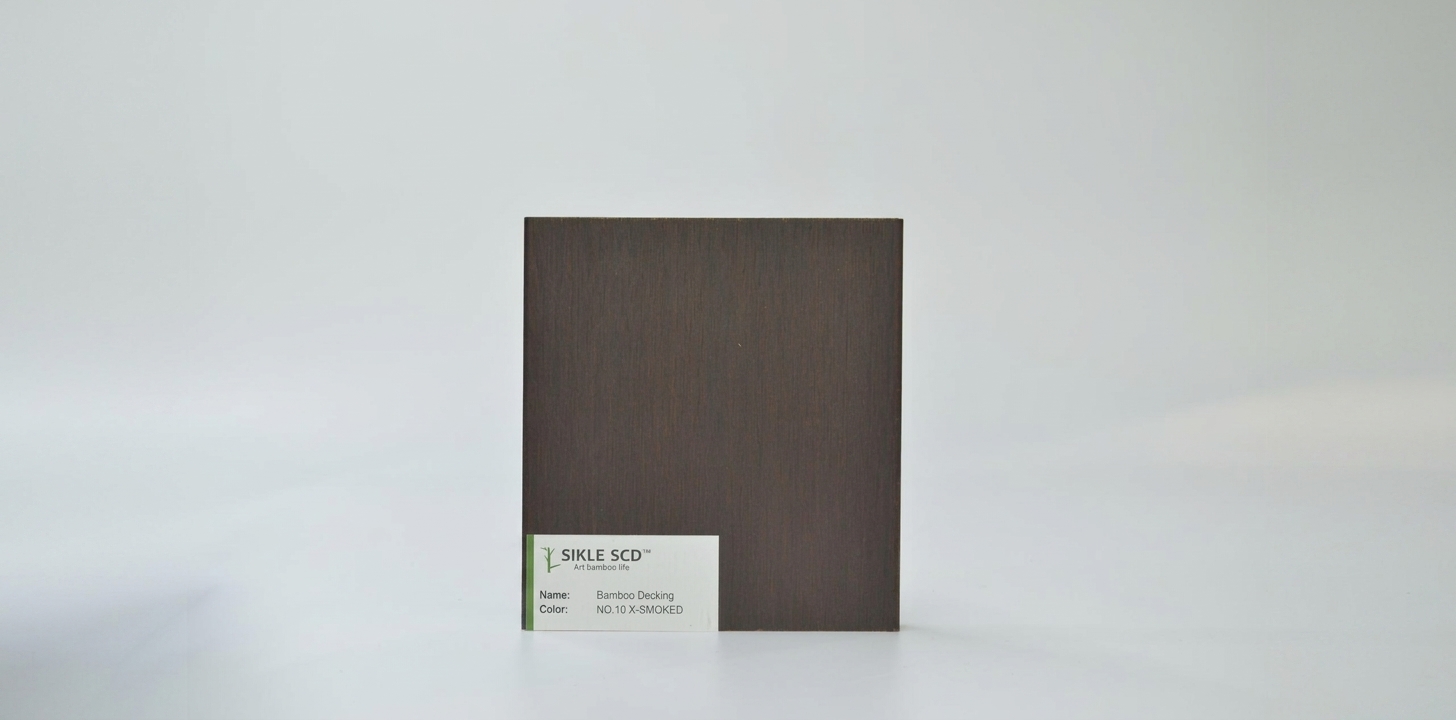
When choosing bamboo flooring for underfloor heating environments, flat pressed bamboo flooring, side pressed bamboo flooring, and heavy bamboo flooring are all good choices. The following are their characteristics and installation precautions.
Flat pressed bamboo flooring is made by pressing bamboo pieces flat, with a relatively simple process and a relatively affordable price. Its advantages are good stability, not easily deformed, and able to adapt to temperature changes in underfloor heating. Moreover, the surface texture of flat pressed bamboo flooring is naturally clear, giving people a fresh and rustic feeling, which can add a natural atmosphere to the home environment. When installing flat bamboo flooring, it is necessary to ensure that the ground is flat, as it requires a high level of ground flatness. If the ground is uneven, it may cause problems such as hollowing and noise after installing the floor. Before laying, the ground should be leveled with an error controlled within 3 millimeters. At the same time, expansion joints should be reserved. Generally, the expansion joints between each floor should be around 8 millimeters to prevent the floors from being squeezed and deformed when heated and expanded. Side pressed bamboo flooring
Side pressed bamboo flooring is made by pressing bamboo strips side by side. This structure makes the compressive strength of bamboo flooring higher, more durable, and able to better withstand the heat changes and pressure of daily use brought by the underfloor heating system. The appearance of the side pressed bamboo floor is unique, and the texture of the bamboo joints presents a continuous sense of lines, full of artistic beauty, bringing a unique style to home decoration. When installing side pressed bamboo flooring, attention should be paid to the consistency of installation direction to ensure the overall aesthetic effect. Due to its structural characteristics, professional tools are required for cutting and installation to avoid situations such as edge breakage and cracking. At the junction with the wall, sufficient expansion space should also be reserved, usually around 10 millimeters, to prevent the floor from hitting the wall due to thermal expansion and contraction, causing deformation of the floor or damage to the wall.
Heavy bamboo flooring, commonly known as bamboo silk board, is a further improvement on the basis of general bamboo flooring. Its material selection is more refined, usually using high-quality local bamboo that is over four years old as the material, and produced through a series of strict processes such as material selection, steaming, drying, and hot pressing. Heavy bamboo flooring has a high density, is more wear-resistant than ordinary bamboo flooring, and is flat and smooth, without insect infestation or deformation. It has an elegant color and refreshing texture, making it very suitable for use in underfloor heating environments. When installing heavy bamboo flooring, due to its high density and weight, there are certain requirements for the load-bearing capacity of the floor to ensure that it can withstand the weight of the floor. During the installation process, high-quality glue and fasteners should be used to ensure the firmness of the floor. At the same time, the installation of heavy bamboo flooring should be avoided as much as possible in humid environments, as humidity may affect the bonding effect of glue and the performance of the flooring. During installation, the indoor humidity should be controlled between 40% -60%.
Regardless of the type of bamboo flooring, it is necessary to ensure that the floor is clean, dry, and free of debris before installation to avoid affecting the installation effect and service life of the flooring. When turning on and off the underfloor heating, sudden temperature changes should be avoided, and it is best to gradually increase or decrease the temperature to reduce the thermal impact on the bamboo floor. In daily use, it is important to avoid scratching the floor surface with sharp objects. Regular cleaning and maintenance can be done by using specialized bamboo floor cleaning agents to wipe and maintain the floor
Speak with our structural engineers about high-rise, commercial, or handcrafted wood needs.
Strategic Material Planning
 EN